may be the key that combines a excessive caloric intake the onset of autoimmune molecule mTOR (mammalian target of rapamycin ) inside the cell that regulates both the uptake of nutrients and intracellular energy levels.
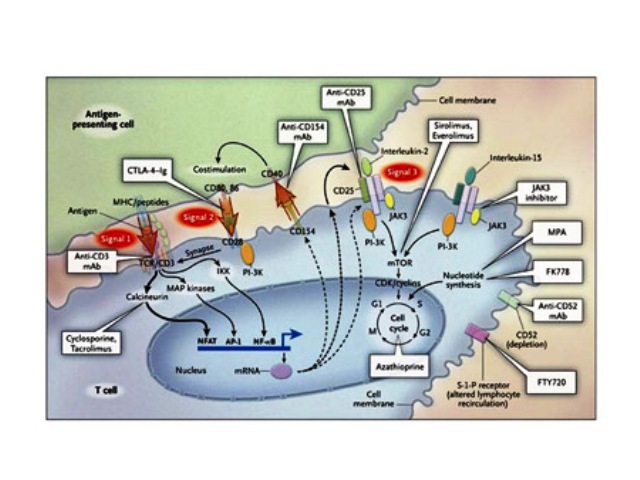
This molecule, as found Giuseppe Matarese and colleagues from the Laboratory of Immunology, Institute of Endocrinology and Experimental Oncology of the National Research Council (CNR-IEOS) of Napoli - who sign the journal Immunity - appears to be overexpressed in T lymphocytes regulators, which previous studies have shown themselves to be crucial in the mechanisms that protect us from autoimmune and inflammatory diseases.
"We have shown that mTOR controls significantly the growth of these cells 'protective' through the 'oscillations', ie changing the time on business," he said Matarese. "These dynamic changes were crucial for the growth of these cells, both in the body or outside it, such as in laboratory cell cultures.
Some problems in this interaction, we assumed, would be the origin of diseases.
"The part of 'oscillations' could cause a malfunction of mTOR and consequently a reduction in the number of T lymphocytes regulators, preparing the pathogenesis of autoimmune diseases," said Matarese. "In fact, in diseases such as multiple sclerosis or juvenile diabetes, these cells are often reduced in number and function and our study could understand why these conditions."
This biomolecular mechanism could thus be a key to interpreting to understand why autoimmune diseases are experiencing a phase of steady increase in incidence in all developed countries.
"Excess calorie and nutrition may lead to constantly high activation of mTOR opposed to its' oscillation ', which are an important aspect in the growth and that the number of cells' protective ', "he said Matarese. "That explains in part why, where there is a presence of overweight and obesity, a chronic stimulation of mTOR due to excess calorie and nutrition would result in failure and the reduction of the lymphocytes 'T regulators' and a consequent increased susceptibility to chronic inflammatory and autoimmune diseases. "


0 comments:
Post a Comment